

Best Materials for Tub to Shower Conversion in 2026
Table of Contents
Quick Comparison: Tub to Shower Materials at a Glance
What Is the Best Material for a Tub to Shower Conversion?
Acrylic Panels
Porcelain and Ceramic Tile
Solid Surface Wall Panels
Custom Tiled Walk-In Shower vs Acrylic: Which Lasts Longer?
Shower Waterproofing Techniques That Prevent Costly Leaks
Tub to Shower Conversion Cost: What Drives the Price
Subfloor, Plumbing, and Permits: The Hidden Requirements
Frequently Asked Questions
Last Updated: September 28, 2026
Quick Comparison: Tub to Shower Materials at a Glance
Choosing the best materials for tub to shower conversion comes down to four options: acrylic panels, porcelain or ceramic tile, solid surface panels, and fiberglass kits. Acrylic and solid surface install fast and stay grout-free. Tile costs more upfront but delivers the highest-end look. Fiberglass is the budget play, and it shows over time.
Here is how they stack up before you read the full breakdown.
Material | Cost Level | Lifespan | Maintenance | Best For |
Acrylic panels | Moderate | Long | Low | Fast, durable conversions |
Porcelain/ceramic tile | High | Longest | Moderate | Custom, high-end designs |
Solid surface | High | Long | Lowest | Minimalist, grout-free walls |
Fiberglass kits | Lowest | Shortest | Low | Tight budgets |
This guide from TRC Home Improvement walks through each option, the waterproofing that makes or breaks it, and the costs, subfloor, and permit requirements most articles skip.
What Is the Best Material for a Tub to Shower Conversion?
The best material for a tub to shower conversion is porcelain tile on a properly waterproofed substrate, because it lasts longest and adds resale value. Acrylic is the best value if speed and low maintenance matter more than a custom look. Solid surface sits between them.
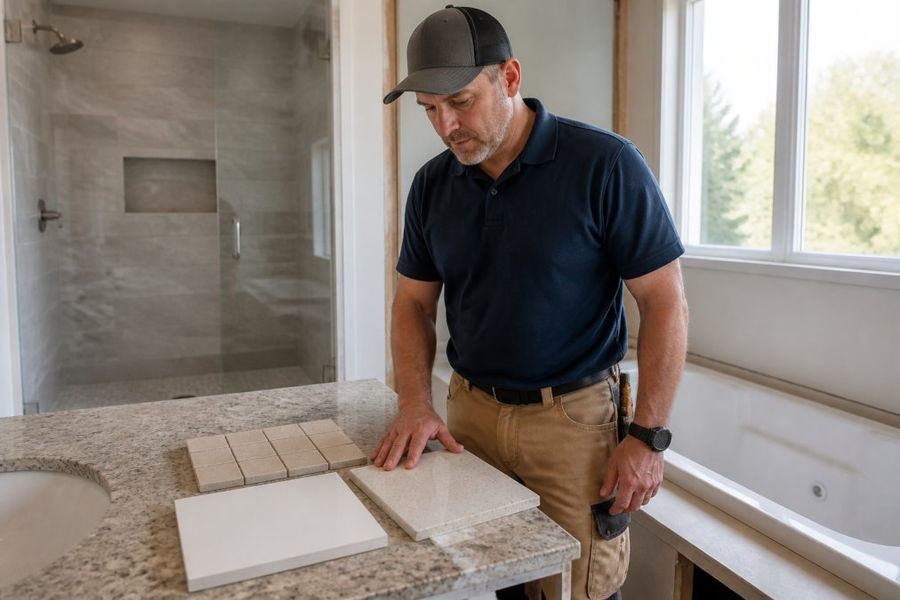
Acrylic Panels
Acrylic is a molded plastic wall panel system that snaps over a waterproof base with no grout lines. It resists mold and mildew, cleans with a wipe, and installs in a fraction of the time tile requires. The trade-off: limited patterns, and a look that reads as builder-grade to some buyers.
Porcelain and Ceramic Tile
Tile is a fired clay product, glazed and set over a waterproofed cement board or foam backer. Large-format porcelain panels cut grout lines dramatically. It is the most durable and most customizable surface, but it demands professional installation and periodic grout sealing. Tile Council of North America installation standards sets the recognized method for setting tile in wet areas.
Solid Surface Wall Panels
Solid surface is an engineered composite, non-porous and grout-free, sold in large panels that seam tightly. It gives a modern, uniform finish with the lowest maintenance of any option. The catch is cost: it runs higher than acrylic, and fewer fabricators work with it.
Custom Tiled Walk-In Shower vs Acrylic: Which Lasts Longer?
A custom tiled walk-in shower lasts longer than acrylic when both are installed correctly. Tile can hold up for decades; acrylic panels typically show scratching and dulling within a decade. But "correctly" is doing enormous work in that sentence.
GrantMaury Builds
The real difference is not the surface. It is the waterproofing behind it. A tile shower with a failed moisture barrier rots the framing long before the tile shows a problem. An acrylic unit hides its failure the same way, leaking at the seams and drain.
Watch Out The most common mistake we see on failed conversions is a pan set on a weak or out-of-level subfloor. The drain does not line up, water pools, and the leak shows up months later as stained drywall on the floor below.
Shower Waterproofing Techniques That Prevent Costly Leaks
Shower waterproofing techniques are the methods that keep water out of your walls and subfloor: a continuous waterproofing membrane over cement board or foam backer, a sloped shower pan that directs water to the drain, sealed seams at every corner and penetration, and a flood test before tile goes up. Skip any one and the whole assembly is compromised.
What most guides leave out is that the right waterproofing method depends on the wall material you chose. A bonded sheet membrane, a liquid-applied membrane, and a foam-board system with factory-sealed seams are not interchangeable, and each pairs with different finishes.
Bonded sheet membrane. A fleece-backed polyethylene sheet is thinset-bonded directly to cement board or a foam backer, then tile is set on top. Seams and corners are covered with manufacturer banding and a pre-formed corner piece. This is the method most often specified for custom tiled walk-in showers because it produces a continuous, vapor-tight layer that tile can bond to directly. The trade-off is that every seam must be rolled and embedded correctly; a lifted edge is a future leak.
Liquid-applied membrane. A trowel- or roller-applied coating builds a seamless layer over cement board. It is flexible around odd shapes and niches, but it requires two or more coats at a specified wet-film thickness, and it must cure before a flood test. Applied too thin, it fails; applied over a dusty or damp substrate, it delaminates. Most practitioners find liquid membranes are best for complex geometry and sheet membranes are best for large flat walls.
Foam backer with sealed seams. Extruded polystyrene foam panels with a factory waterproof face are installed with thinset and mechanical fasteners, then seams are sealed with the manufacturer's banding and sealant. This system is lightweight, cuts with a utility knife, and is dimensionally stable, which makes it popular for conversions where the existing framing is slightly out of square. It is not a substitute for a sloped pan; the pan still has to direct water to the drain.
Acrylic and solid surface units. These do not use a membrane in the wall cavity the way tile does. Instead, the panel itself is the waterproof layer, and the critical points are the seams where panels meet the base, the drain gasket, and any penetration for a valve or showerhead. A common failure pattern is a pan set on a subfloor that is not level, which stresses the drain gasket and shows up as a stain on the ceiling below months later. Ensuring a perfectly level foundation remains essential for long-term integrity, though homeowners seeking a distinct aesthetic may also consider durable flooring alternatives that offer similar moisture resistance.
A proper system layers like this:
A sloped, structural subfloor or pre-formed pan
A waterproofing membrane bonded to the substrate
Alkali-resistant tile backer at all seams and corners
A flood test held before any finish material goes on
The shower pan needs a drainage slope of roughly a quarter inch per foot toward the drain.
Key Takeaway Match the waterproofing method to the wall material before you buy anything. Sheet membrane for large tile walls, liquid membrane for complex shapes, foam board for out-of-square framing, and factory-sealed panels for acrylic and solid surface. The finish is the visible layer; the waterproofing is the one that decides whether the conversion lasts.
Tub to Shower Conversion Cost: What Drives the Price
Tub to shower conversion cost depends on four variables: material choice, whether the drain must be relocated, subfloor condition, and permit fees. Fiberglass kits sit at the low end; custom tile with a relocated drain sits at the top. Because every bathroom is different, the only accurate number comes from an on-site estimate.
What moves the price most:
Drain relocation. Moving the drain from the tub position to a centered shower position adds labor and rough-in work.
Subfloor repair. Rotted or out-of-level subfloor must be corrected before anything else.
Hidden damage. Water damage behind an old tub is common and cannot be priced until the wall is open.
Permits and inspection. Required in most jurisdictions and added to the project total.
Subfloor, Plumbing, and Permits: The Hidden Requirements
Fiberglass kit: Low to moderate. The pan and walls are pre-formed, the drain location is fixed, and the kit is designed to drop onto a prepared base. If the existing drain lines up, this is the least invasive option. If it does not, you are back to rough-in work.
Acrylic panels: Low to moderate. Same logic as fiberglass, but panels are more forgiving of minor wall irregularities. Drain relocation is still the wild card.
Solid surface panels: Moderate. Panels are heavier and seams must be tight, but the plumbing work is similar to acrylic. Fabrication and handling add labor, not plumbing complexity.
Custom tile: High. Tile requires a sloped pan, a waterproofing system, a flood test, and a drain that is set at the correct elevation relative to the finished tile. Every one of those steps interacts with the plumbing rough-in. This is the option where a small drain error becomes a hidden leak inside the wall.
Pro Tip Ask any contractor to show their license number before signing. TRC Home Improvement is fully licensed in North Carolina (GC #106823) and South Carolina (#60594), and we walk you through the permit process so nothing gets missed.
That is why we lead with waterproofing on every custom tiled walk-in shower: a conversion is only as good as the layer you will never see again.
Frequently Asked Questions
What is the best material for a bathtub shower combo?
There is no single best material for every home. Acrylic panels cost less and need little maintenance, porcelain tile offers a high-end look and lasts decades with proper care, and solid surface panels give a grout-free finish that resists mold. The right choice depends on your budget, how much upkeep you want, and whether you plan to stay in the home or sell soon.
Which is more durable: acrylic or tile for shower walls?
Porcelain tile outlasts acrylic in most cases, often lasting 30 years or more when installed over a proper waterproofing membrane and cement board. Acrylic panels resist cracking and mold but can scratch and dull over time. For rental properties or quick flips, acrylic is often the practical pick. For a forever home, custom tiled walk-in shower walls hold up better.
How much should it cost to convert a bathtub to a shower?
Tub to shower conversion cost depends on material choice, shower size, plumbing changes, and whether you relocate the drain. Fiberglass kits sit at the low end, while porcelain tile and custom mortar pan systems push the price higher because of labor and waterproofing materials. TRC Home Improvement provides a free no-pressure estimate so you know the exact figure before work begins.
Do I need waterproof backer board for a shower conversion?
Yes. Every shower conversion needs a waterproofing membrane or backer board behind the tile or panels. Cement board alone is not waterproof; it needs a moisture barrier or liquid-applied membrane over it. Skipping this step is the top cause of hidden water damage, mold, and failed showers within a few years. Proper shower waterproofing techniques protect the subfloor and framing.
Contact Us


Comments